Dallas residents' thoughts on Waymo — and what it means for marketing to D-town
Dallas residents' thoughts on Waymo — and what it means for marketing to D-town
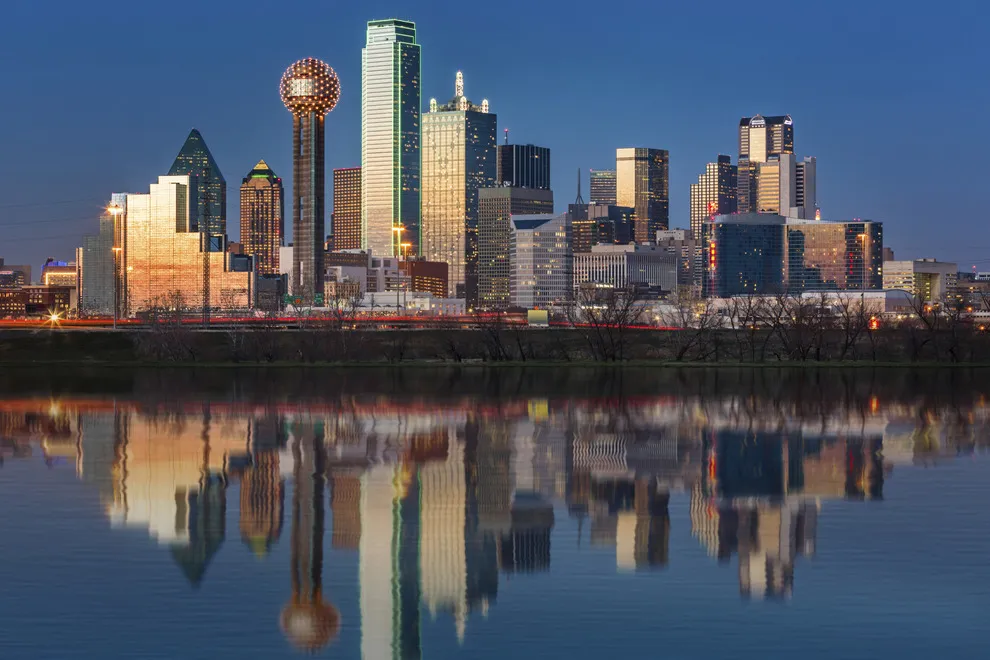
In late February of 2026, Waymo launched "Early Access" in Dallas, making it one of ten U.S. cities autonomous vehicles drive freely. Dallas is a particularly interesting test case: it’s one of America’s most car-dependent metros, where driving is a core component of the culture.
I conducted both secondary research on the Dallas market and user research from three Dallas residents to gain empathy and learn more about their preconceived notions, attitudes, and questions about autonomous vehicles. They spanned the spectrum of acceptance — Marcus is a Waymo "Skeptic", John is a Waymo "Convert," and Claire is a Waymo "Enthusiast."
This report focuses on what matters most at launch: how real Dallas consumers think about getting in the Waymo car.
1. Lead with experience: the product is the pitch.
Across all three interviews, firsthand experience was the single strongest driver of trust; no amount of data, advertising, or branding came close. John went from planning his escape route in the event of a crash to calling Waymo "a better driver than probably a human is" after just two rides. Claire is a self-described 10/10 on openness but hasn't taken a single ride. There's a reason for this — she's waiting for a friend to nudge her, not for another ad. Even Marcus, the most resistant interviewee, said his conditions for trial depend on years of seeing it work, not being told it works. The implication: Waymo's highest-ROI marketing investment in Dallas is getting people into the car. First-ride referral programs, ride-together incentives, and experience-based activations will likely outperform awareness campaigns.
2. Position Waymo as the premium safety choice — not the budget alternative.
The competitive frame in Dallas isn't Uber at the low end. It's Alto — a local, premium ride-hail service that charges more for professional drivers and a safer experience. Claire already pays that premium and said Waymo "appears even safer than Alto." John's biggest praise was the consistency, cleanliness, and absence of "weird Uber stuff." For the safety-conscious Dallas consumer, the pitch isn't "cheaper than a cab." It's "safer than anything with a human behind the wheel."
3. Earn Dallas. Don't force it.
Marcus's most visceral objection wasn't about technology, it was about power. "Nobody in Plano voted on whether we wanted robot cars on our roads." He framed Waymo as a Silicon Valley company treating Dallas like a test lab, and that sentiment carries social weight in a market where local identity runs strong. The antidote isn't more data or shinier marketing. It's humility: local partnerships, Texas-rooted spokespeople, independent (non-Waymo) safety endorsements from bodies like NHTSA, and proactive engagement with the economic concerns around job displacement. Trust in Dallas is built over decades, not weeks.
Research: who I spoke with
Research: who I spoke with
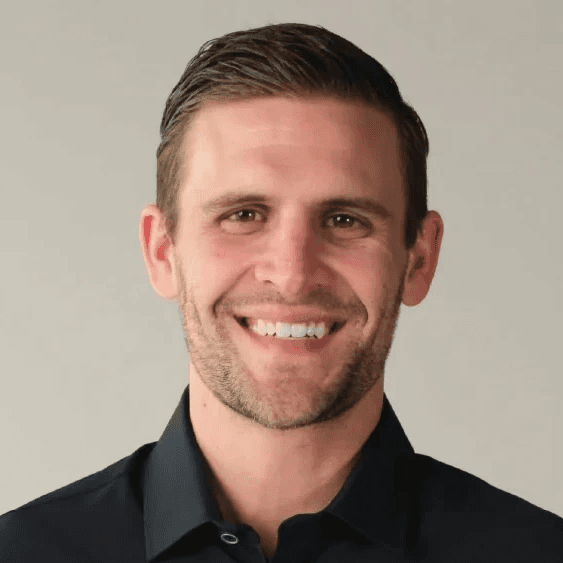
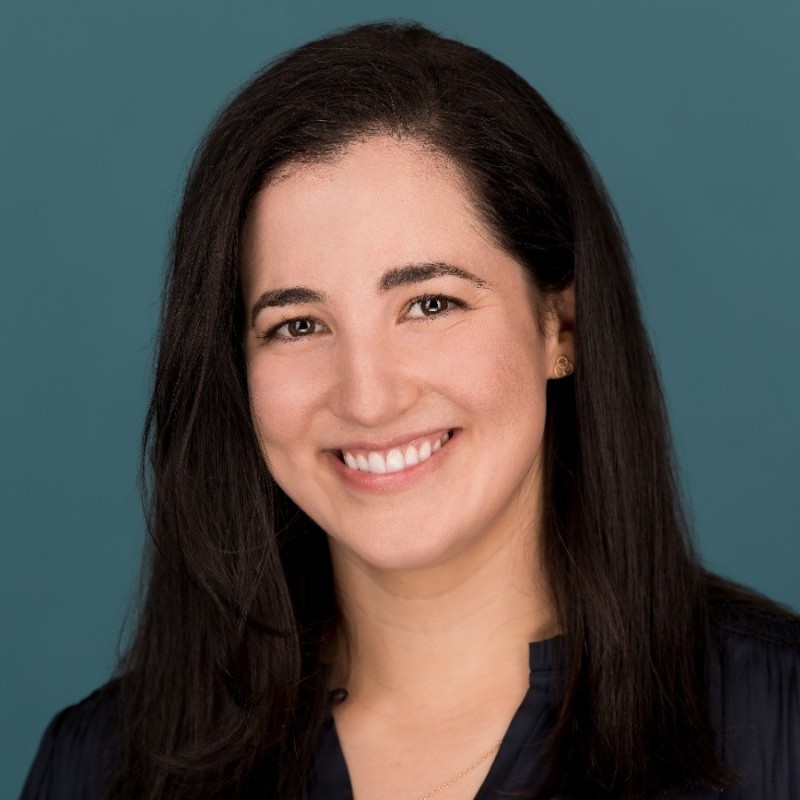
I interviewed three Dallas residents to understand their transportation habits, their perceptions of autonomous vehicles, and what it would take to get them in a driverless car (if they hadn't yet experienced it).
"Trust is built in decades, not weeks."
"It's an Uber without the driver."
"I want to try it, but it's not on my list."
Context: Dallas at a glance
Context: Dallas at a glance
of DFW workers drive to work alone
of DFW workers drive to work alone
of DFW commuters use public transit
of DFW commuters use public transit
years old is the median age of Dallas
years old is the median age of Dallas
Sources: ACS / census data.
Dallas is known for its sprawling layout and thriving car culture. With 76% of residents driving alone, just 3% using public transit, and an average age of 33, Dallas is ripe for a transportation alternative. Since DART began operating its light rail service in 1996, it has struggled to gain traction with Dallas residents, and the average Dallas commuter spends over 50 minutes in their car each day.
The competitive landscape includes ride-hailing companies and local taxi services, but none have been able to shift the entrenched driving culture significantly. Regulatory moves in Dallas have gradually opened the door for autonomous vehicles, with effusive praise from Dallas mayor Eric L. Johnson, and positive public comments from Councilman Chad West.
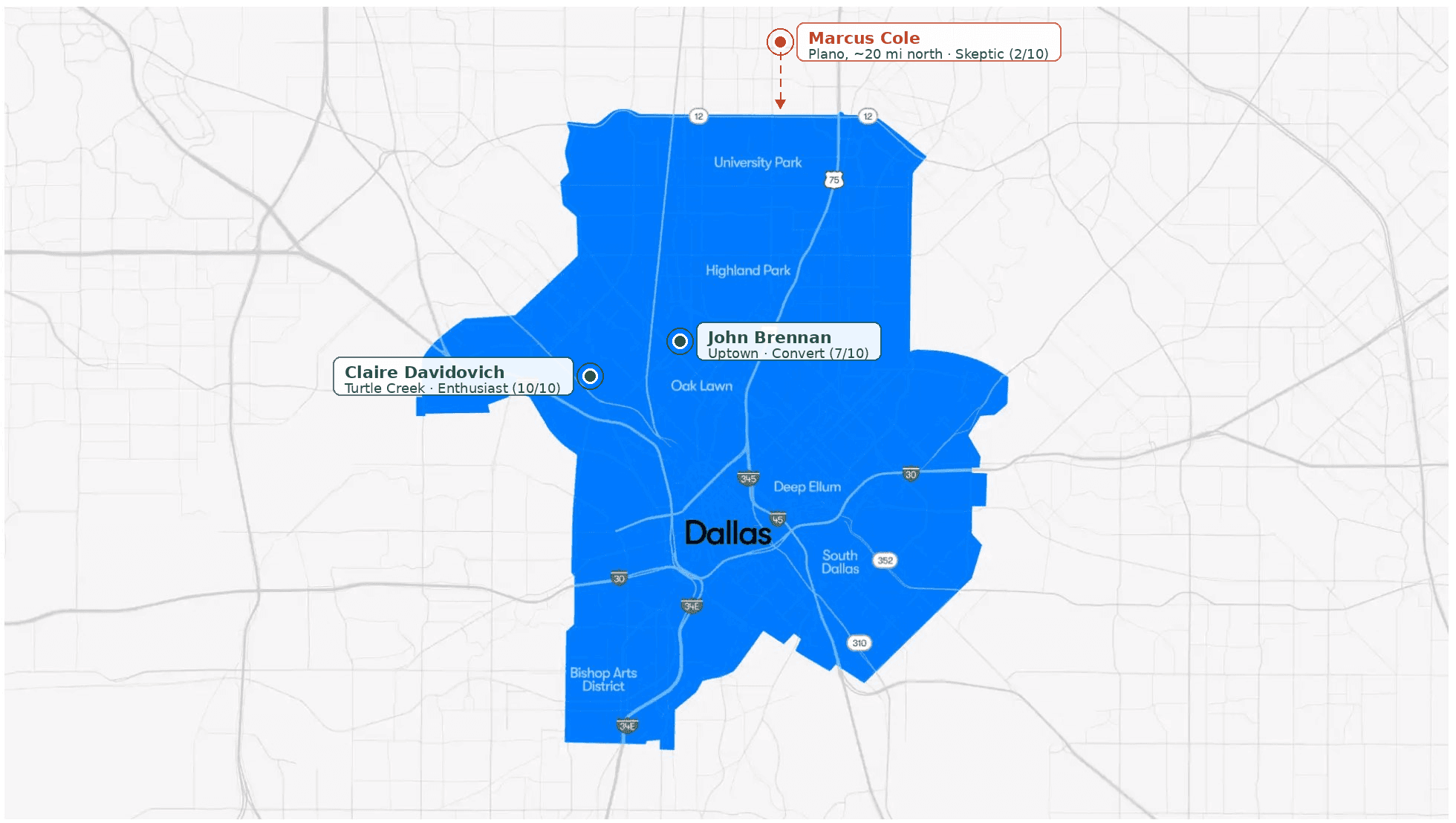
Waymo's service area as of March 2026 and the locations of the three residents I spoke with. John and Claire live within the service area, while Marcus lives ~20 miles north in Plano.
Today, Waymo is the only service offering fully autonomous vehicles in Dallas, just as the World Cup approaches — a unique opportunity for brand awareness and exposure.
1. The trust gap isn't about information — it's about source.
Marcus didn't reject Waymo's 10x safety statistic because he's anti-data. He rejected it because Waymo produced it. "It's like a drug company funding its own clinical trial." John, by contrast, accepted the same statistic — but only after riding and seeing the technology perform. Data confirms experience; it doesn't replace it. For the Dallas market, third-party validation from NHTSA or independent researchers will carry more weight than any proprietary safety report.
2. The empty driver's seat is both the biggest fear and the biggest feature.
John's first thought when he got in a Waymo was how to escape if it crashed. A few rides later, the absence of a driver became his favorite part: no small talk, no rerouting, no wondering who this stranger is. Claire echoed this. She uses Alto specifically to avoid the safety risks she associates with Uber drivers. The empty seat is a liability for prospects and a luxury for converts. Marketing needs to acknowledge the fear and sell the freedom, in that order.
3. Dallas has a "last 50 feet" problem, especially with apartment buildings.
Claire's HOA sent building-wide communications about autonomous vehicle logistics. Her building has a private driveway that Waymo vehicles can't access, and many of her elderly neighbors can barely walk to the street. This isn't an edge case. Dallas is full of gated communities, private roads, and valet-style residential buildings. The "last 50 feet" between the nearest public road and someone's front door is a structural adoption barrier specific to the DFW built environment.
4. Driving is identity, not just transportation.
Marcus doesn't prefer driving, he equates it with autonomy. "Driving is freedom. You're asking me to give up freedom for convenience, and I don't need that convenience." For this segment, Waymo isn't replacing a ride; it's threatening a value system. Messaging that frames autonomous driving as "superior" to human driving will actively antagonize this audience. The better play: position Waymo as a complement. It's ideal for specific moments (airport runs, nights out, aging parents), not a replacement for the driver's seat.
5. The enthusiasm-to-action gap is a near-term opportunity.
Claire is the clearest proof: she has had the Waymo app for months, sees Waymos around the city, but still hasn't taken a single ride. She doesn't need to be convinced. She needs to be activated — a referral from a friend, a promo code, a well-timed push notification on a Friday evening. This segment likely represents a significant share of the Dallas early market: people who've downloaded the app, seen the cars, and haven't yet crossed over. A peer referral program targeting this group would likely be the highest-ROI activation lever available at launch.
" width="959.5px"/></svg>)
"The Screen Is the Pitch"
A campaign built around the in-car sensing display. John's trust inflection point was seeing the Waymo screen show bikes, buildings, and precise distances the car was tracking. That perspective shift from "nobody's driving" to "something superhuman is driving" is potentially reproducible via content and ads. A short-form video series, interactive video game, or experiential OOH installation that lets non-riders see what the car sees could shortcut the trust-building process for the Convert and Enthusiast segments. Think: a window into the car's perception, not a product demo. Here's a rough prototype of how this could work.
Click the toggle.
This study was a focused sprint — three interviews and a secondary research review, conducted in about a week. If this were a full engagement, here's where I'd go deeper:
Expand the interview panel. Three personas can't represent a metro of 8 million. I'd prioritize interviewing DART-dependent commuters, parents evaluating Waymo for teen transportation, and Dallas service-industry workers who currently drive for Uber/Lyft, the segment most directly affected by autonomous vehicle deployment.
Quantify the enthusiasm-to-action gap. Claire's profile suggests a large pool of app-downloaders who haven't taken a first ride. Understanding the size of that pool and what triggers conversion (referral? promo? time of day?) would directly inform campaign investment.
Pressure-test the Alto competitive frame. Claire's preference for Alto over Uber is a signal worth validating at scale. If the safety-premium segment is larger than assumed, it reshapes Waymo's entire Dallas positioning and pricing strategy.
Map the "last 50 feet" problem. A GIS analysis of Waymo's service area overlaid with private roads, gated communities, and valet-style buildings would quantify the access gap Claire surfaced and inform where infrastructure partnerships are needed.
This is independent research prepared as part of an interview process. It is not affiliated with or endorsed by Waymo.
This is independent research prepared as part of an interview process. It is not affiliated with or endorsed by Waymo.
This is independent research prepared as part of an interview process. It is not affiliated with or endorsed by Waymo.